
Nestled in a sharp bend of the turquoise Aare River, Switzerland’s capital city, Bern, feels like it’s been pulled directly from the pages of a storybook. Unlike other busy European capitals, Bern moves at a relaxed and charming pace. Its UNESCO listed Old Town is a masterpiece of medieval preservation, with over six kilometers of covered arcades, sandstone buildings that shine in the afternoon sun, and a rich history found in every ornate fountain and cobblestone street. Many are surprised to learn that this quiet and enchanting city is the political heart of Switzerland. But that’s the magic of Bern it smoothly blends grand government buildings with a cozy, small town feel. If you’re planning a trip to Switzerland, skipping Bern would be a big mistake. Here’s everything you need to fall in love with it.
A walk through a living museum:
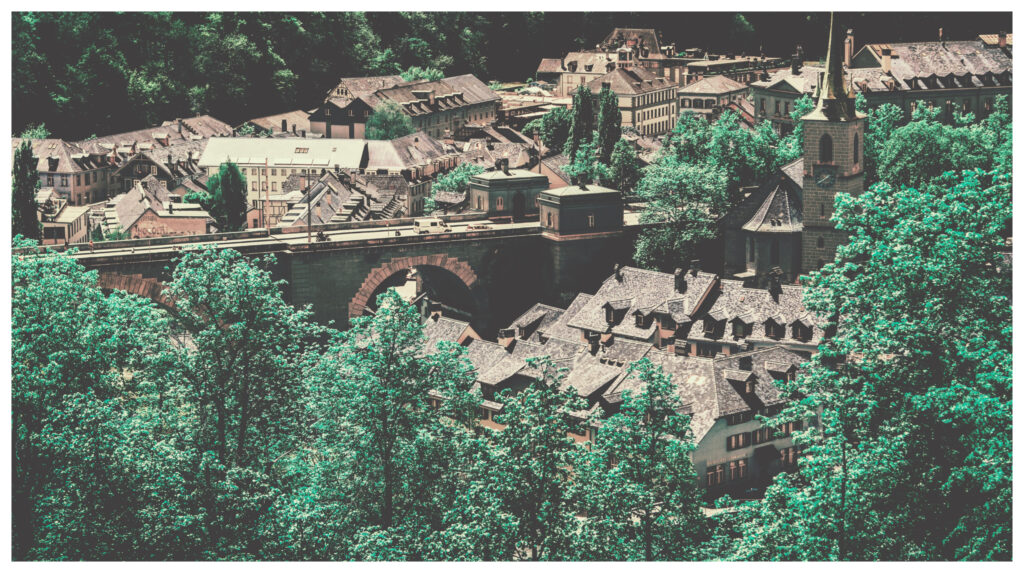
The Old Town Your visit should start in the Altstadt (Old Town).A UNESCO World Heritage Site since 1983, it’s one of the best preserved medieval city centers in Europe. The first thing you’ll notice are the Lauben over six kilometers of continuous covered walkways that house a variety of shops, boutiques, bars, and cafes. As you walk around, look down. You’ll be greeted by Bern’s iconic fountains, each with its own character and history. Dating back to the 16th century, these colorful figure fountains were once important water sources. Today, they serve as beautiful landmarks. Don’t miss the Kindlifresserbrunnen (Child Eater Fountain) a scarylooking ogre eating a bag of children and the elegant Justice Fountain.
The heart of the city: The Zytglogge
No visit is complete without spending time at the Zytglogge (Clock Tower). This Bernese icon was built in the early 13th century and has served as a guard tower, prison, clock tower, and civic memorial. But the real magic happens four minutes before every hour. Crowds gather to watch its amazing astronomical clock come to life.
Mechanical bears, a dancing jester, and the figure of Chronos with his hourglass perform a charming show that has delighted visitors for centuries. For a deeper look, book a tour to see the fascinating mechanical clockwork inside.
The City’s Namesake: The Bern bear park
You can’t talk about Bern without mentioning its beloved bears. According to legend, the city’s founder, Duke Berthold V of Zähringen, vowed to name the city after the first animal he killed on the hunt a bear (Bär in German). These amazing animals have been kept in Bern since at least 1513. Forget cramped pits; today’s bears live in the modern Bärenpark (Bear Park). This large, riverside enclosure offers a natural habitat for Björk, Finn, and their daughter Ursina. You can view them from above the park or from a platform by the river, often watching them play, fish, and climb. It’s a great and ethical way to see these symbols of the city.
Beyond the Medieval: Must See museums & views
While the past is always present, Bern is far from stuck in it.
The Rosengarten:
For the best panoramic photo of the Old Town and the Aare River bend, hike up to the Rosengarten (Rose Garden). It’s a beautiful park with over 200 varieties of roses, a lovely restaurant, and an unbeatable view. It’s especially romantic at sunset.
Einstein Haus:
Did you know Albert Einstein developed his Theory of Relativity while living in Bern? You can visit his former apartment on Kramgasse, which is preserved as a small museum. It’s a fascinating glimpse into the life of a genius.
The Federal palace (Bundeshaus):
The stunning domed building that houses the Swiss government and parliament is open for tours. It’s a powerful symbol of Swiss democracy and offers a look into the country’s unique political system. The square in front of it often hosts markets and offers a fantastic view.
A taste of bern: What to eat & drink
Swiss cuisine is more than just cheese and chocolate, and Bern has its own specialties.
Bernese platter:
This is the ultimate hearty meal. It features a variety of meats like smoked pork, beef tongue, and sausage, served with sauerkraut, green beans, and boiled potatoes. It’s a must try for meat lovers.
Rösti:
This classic Swiss potato dish is a crispy, golden delight, often served as a side or topped with a fried egg, cheese, or other accompaniments.
Zibelemärit:
If you’re lucky enough to visit on the fourth Monday of November, you’ll experience the famous Onion Market. The entire Old Town transforms into a fragrant sea of braided onion strings and festive celebrations.
An adventurous dip: Swimming in the Aare
For a truly local experience in the summer, join the Bernese for a swim in the Aare River. The water is incredibly clean and a stunning shade of blue green. The classic route involves taking a tram upstream to the Freibad Marzili (a public pool) or the Eichholz area, and then floating downstream for about 20-30 minutes back towards the city center. Safety is important only strong swimmers should attempt this, and using a floating device like a “Aare Gumpi” (a waterproof bag) is highly recommended.
Practical tips for your visit
Getting around:
The Old Town is compact and best explored on foot. For longer distances, Bern’s network of trams and buses is efficient and easy to navigate.
The Bern card:
Consider this tourist card if you plan on visiting multiple museums and using public transport. It offers free travel and discounts on attractions.
Day trips:
Bern’s central location makes it a perfect base. Easy train rides can take you to Interlaken, the Jungfrau Region, Lucerne, or the Emmental cheese country within an hour.
Bern may not shout as loudly as Zurich or Geneva, but it whispers an invitation to a more profound, authentic Swiss experience. It’s a city where you can witness a parliamentary session in the morning, follow in Einstein’s footsteps in the afternoon, and share a moment with a bear family at dusk. It’s a capital city that remembers to stop and smell the roses literally. And that is its undeniable, timeless charm.
9 Responses