
There are places you see in photographs that seem too surreal to be real. Meteora is one of those places. Imagine colossal pillars of rock reaching impossibly for the heavens, with centuries old monasteries built atop them by the hands of devoted monks. This isn’t a fantasy novel’s setting; it’s a very real, profoundly breathtaking destination in the heart of Greece. For many, a trip to Greece is about the islands and the Acropolis. But travel north, into the Thessaly plain, and you’ll find a landscape that defies imagination and a spiritual aura that is almost tangible. This is your ultimate guide to experiencing the magic of Meteora for yourself.
Where earth meets heaven: The meaning of Meteora
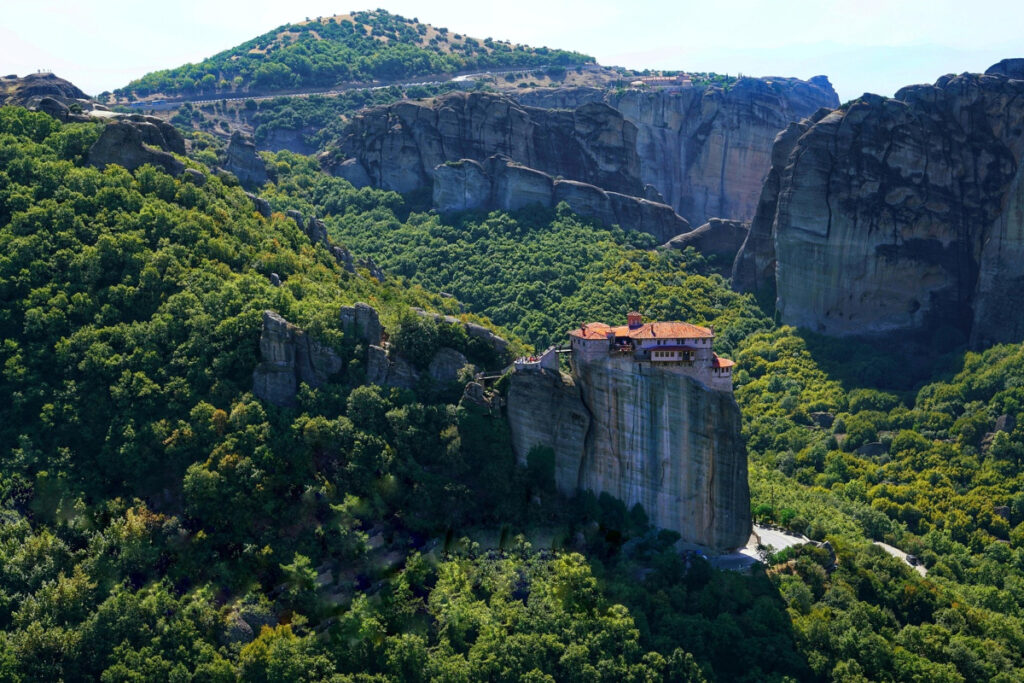
The name itself tells the story.“Meteora” translates to “suspended in the air” or “in the heavens above.” It’s a fitting description for a place where monasteries seem to float between the earth and the sky. This unique geological phenomenon, combined with its deep religious significance, is why Meteora is a UNESCO World Heritage Site, protected for its value to all of humanity. The giant rock pillars, some over 1,200 feet tall, were formed over 60 million years ago. What was once a river delta was transformed by earthquakes and weathering into this forest of stone. But the true wonder began around the 11th century when hermit monks first sought solitude in the caves dotting these cliffs.
A testament to faith: The history of the Monasteries
The story of the Meteora monasteries is one of incredible human determination and faith. Seeking a life of prayer and isolation away from political turmoil, the first monks arrived in the 9th and 10th centuries, living in the caves. The organized monastic community began in the 14th century, led by Saint Athanasios the Meteorite, who founded the Great Meteoron Monastery on the Broad Rock. At their peak in the 16th century, there were 24 monasteries functioning. The logistics of their construction remain a source of awe. How did they do it? The answer involves immense courage, scaffolding anchored in the rock, and a system of nets, baskets, and ropes. They used ladders that could be pulled up and hauled materials and themselves up in baskets. It was a perilous act of devotion. Today, only six of these monasteries are still active and open to the public, each a living museum of Byzantine art, history, and unwavering faith.
The six monasteries you can visit
Each monastery has its own character and treasures. You’ll need at least a full day to visit them all.
Great Meteoron (Monastery of the transfiguration):
The largest, highest, and oldest of them all. It’s like a small village in the sky, with a main church, a museum, a cellar, and a breathtaking courtyard. Its katholikon (main church) is adorned with stunning frescoes depicting martyrdoms and persecution.
Varlaam monastery:
The second largest, named after the first monk to ascend the rock. It houses a remarkable collection of relics, post Byzantine icons, and a massive wooden wine barrel. The view from its balcony is one of the best.
Roussanou monastery:
Dedicated to St. Barbara, this monastery is often considered the most picturesque, built on a lower but incredibly narrow rock pinnacle. It is now a convent, run by nuns, and is accessed by a relatively easy footbridge.
St. Stephen’s monastery:
This is the most accessible monastery, requiring no steps to enter. It’s a nunnery known for its peaceful gardens and a small museum housing ecclesiastical items. It was heavily damaged during WWII but has been beautifully restored.
Holy trinity monastery (Agia Triada):
Famous for its appearance in the James Bond film *For Your Eyes Only*, this monastery offers the most dramatic ascent. You’ll climb 140 steps carved into the rock after a short cable car ride, a journey that makes the arrival feel truly earned.
St. Nicholas anapafsas monastery:
A smaller monastery built on a very limited rock surface, forcing it to be constructed on multiple levels. It is celebrated for the exquisite frescoes by the renowned Cretan iconographer, Theophanes the Monk.
Planning your visit: A practical guide
To get the most out of your trip, a little planning can help a lot.
Getting there:
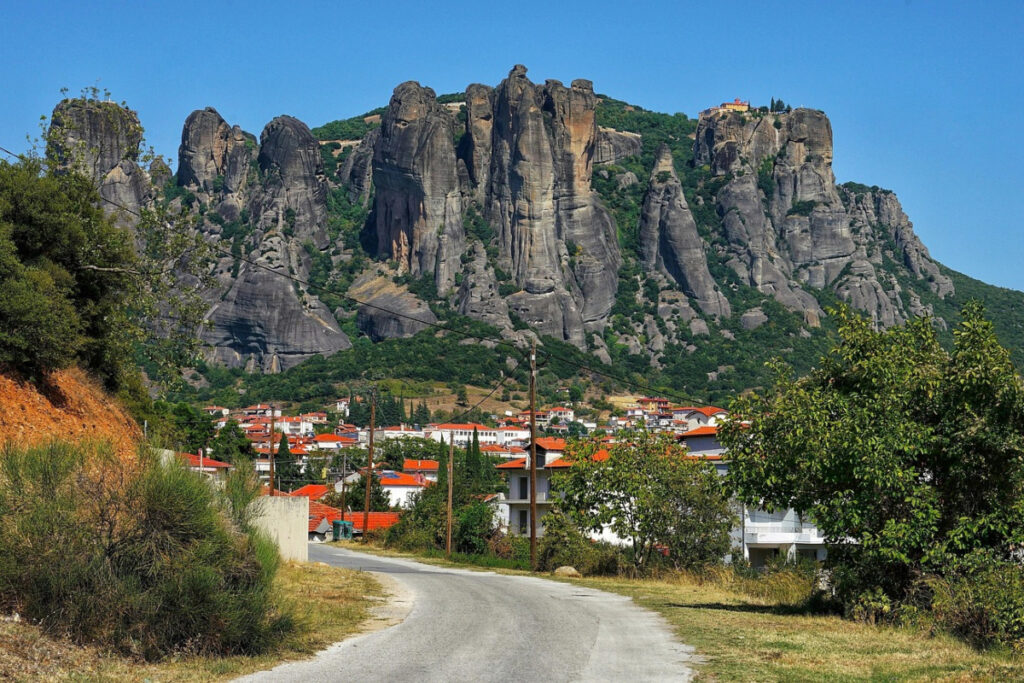
Meteora is not on an island. It’s in central Greece. The closest towns are Kalambaka and Kastraki.
- By train:
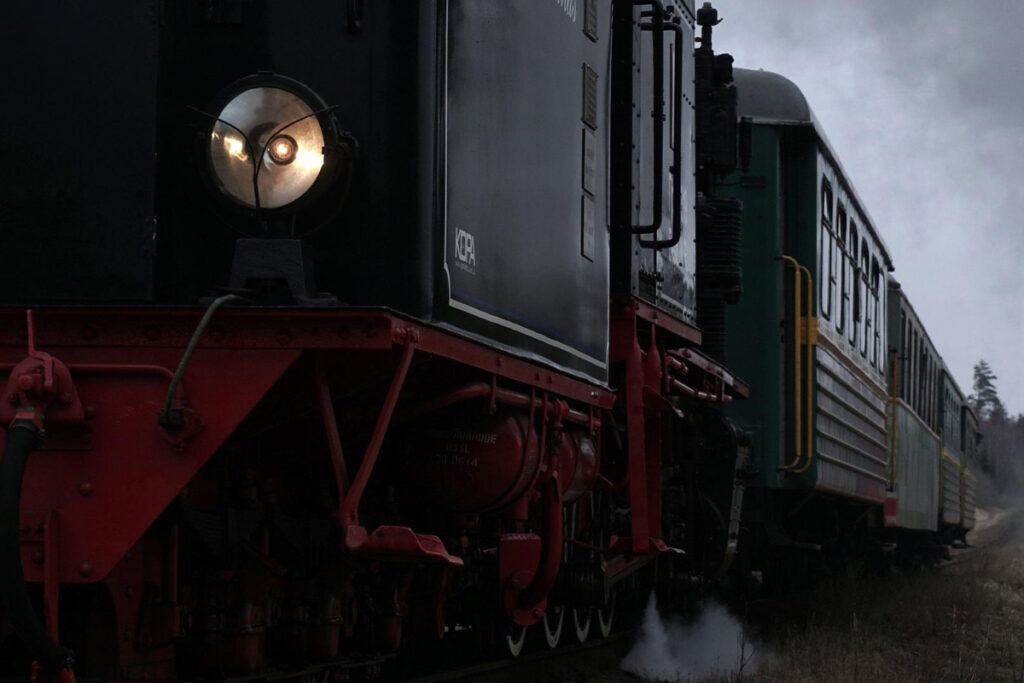
A scenic 4 to 5 hour train ride from Athens (Larissis Station) to Kalambaka is a popular and relaxing choice.
- By car:
Renting a car gives you the most freedom. The drive from Athens takes about 4 hours via the highway.
- By bus:
KTEL buses run from Athens to Trikala, where you switch to a local bus to reach Kalambaka.
Best time to visit:
- Spring (April to June) and Autumn (September to October) are the best times. The weather is nice, the surroundings are green or colorful, and there are fewer people.
- Summer (July to August) can be very hot and busy, but the days are long.
- Winter offers a magical and moody atmosphere with fewer visitors, but some monasteries may have shorter hours or close due to snow.
Must Do experiences beyond the monasteries
While the monasteries are the main attraction, Meteora has more than just that to offer.
Chase the sunrise or sunset:
This is a must. The way the light hits the rocks and the monasteries is very special. The Sunset Viewpoint near Kalambaka is the most famous place to watch this.
Go hiking:
Walking between the rocks is the best way to understand their size. There are many well marked trails. A local guide can show you secret paths and share interesting stories you wouldn’t miss otherwise.
Take a guided tour:
Whether it’s a bus tour, a hiking tour, or a photography tour, a good guide will help you understand the history and geology.
Try rock climbing:
For adventurers, Meteora is a top rock climbing spot with over 700 climbing routes.
Essential tips for your visit
Dress modestly:
Cover your shoulders and wear skirts or trousers that go below the knee for everyone. Some monasteries offer wrap around skirts at the entrance.
Check the schedule:
Each monastery has its own opening days and times. These can change throughout the week. Check the official schedule before you go.
Wear good shoes:
You will be climbing a lot of steps. Comfortable, sturdy shoes are a must
Stay overnight:
Don’t try to visit from Athens in a day. Staying in Kalambaka or Kastraki lets you enjoy the monasteries during peaceful early morning or late afternoon light.
Support the monasteries:
There’s a small entrance fee (around €3) for each monastery, which helps with preservation and upkeep.
A place that stays with you
Meteora is more than just a list of places to visit. It’s an experience that stays with you. It’s the feeling of walking where hermits once lived, seeing a landscape that feels touched by the divine, and understanding the strength of human faith and perseverance. It’s a powerful reminder that some of the world’s greatest beauty isn’t just in the places themselves, but in the awe they inspire in us. Start planning your journey to the skies. Meteora is waiting.