
Rephrase the following: ‘You’ve seen the pictures: a sun drenched stone balcony, draped in flowers, with tourists gazing up from a crowded courtyard. Yes, Verona is the city of Shakespeare’s star-crossed lovers, but to label it only as the backdrop for Romeo and Juliet is to miss its true, magnificent soul. Nestled in a bend of the Adige River in Northern Italy’s Veneto region, Verona is a living tapestry woven with 2,000 years of history. Here, Roman ruins stand shoulder to shoulder with Renaissance palaces, bustling market squares
echo with the clinking of wine glasses, and the Alps provide a dramatic, snow capped backdrop. This isn’t just a stop on a checklist; it’s a city to be felt and savored. Let’s peel back the layers of this UNESCO World Heritage site and discover why Verona deserves a top spot on your Italian itinerary.
The heartbeat of the city: Must See Verona landmarks
Your exploration of Verona naturally begins in its historic center, a compact and wonderfully walkable area where every corner tells a story.
The Verona arena: Rome’s grandeur in the north
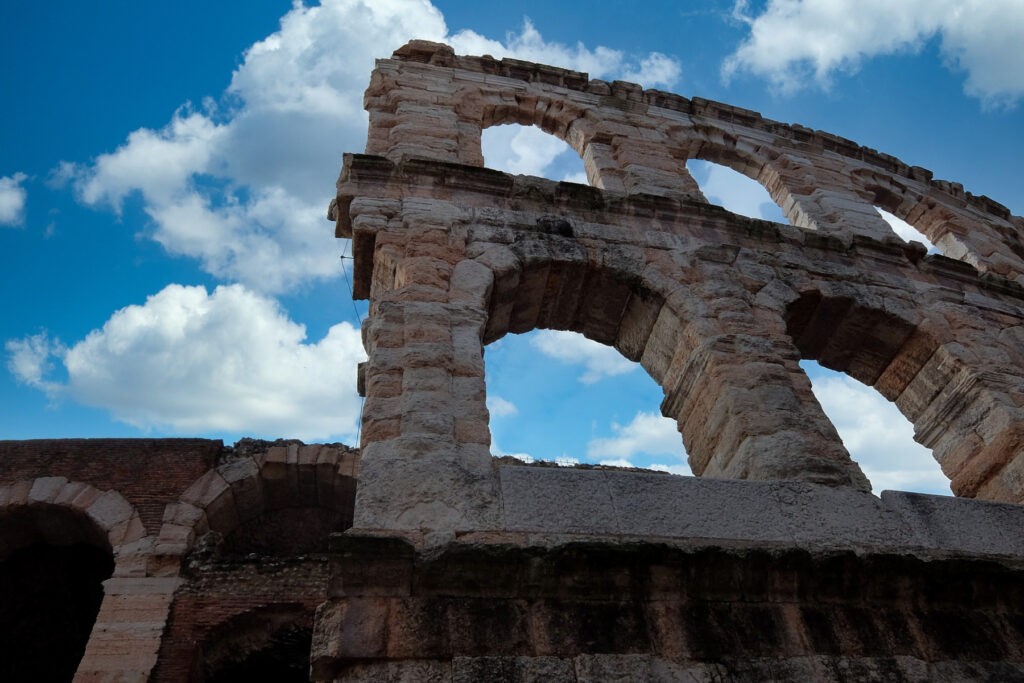
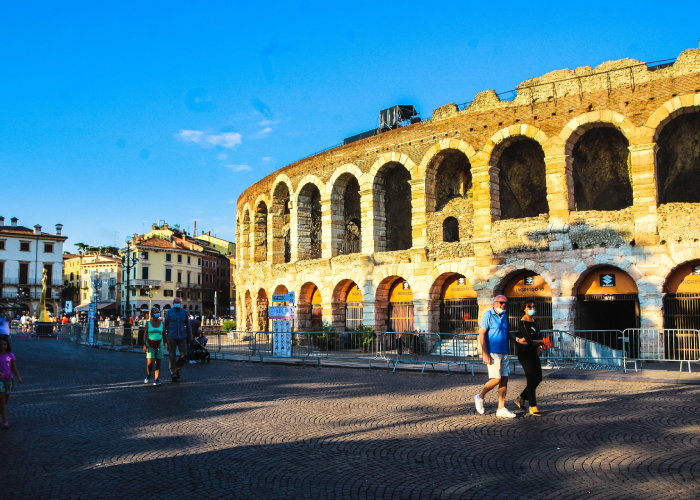
Your first stop has to be the colossal Verona Arena in Piazza Bra. This pink hued Roman amphitheater, built in the 1st century AD, is astonishingly well preserved. It’s older than the Colosseum and, remarkably, still in use today. While you can tour the stone steps during the day, the real magic happens at night. From June to August, the Arena transforms into the world’s most spectacular open air opera house. Imagine hearing the powerful notes of Aida or Carmen under a starry Italian sky it’s an experience that sends shivers down your spine.
Piazza delle Erbe: From roman forum to vibrant market
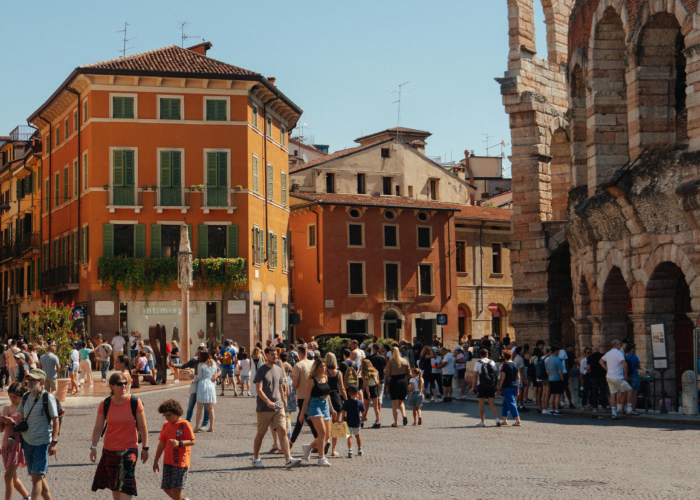
Step from the grandeur of Piazza Bra into the lively chaos of Piazza delle Erbe. This square was once the Roman Forum and today is a vibrant, colorful market. Stroll past stalls selling fresh fruit, local cheeses, and, yes, typical tourist trinkets. But look up! The square is framed by incredible architecture, including the frescoed Mazzanti Houses and the towering Lamberti Tower. For the best view in Verona, take the elevator or climb the 368 steps to the top of the tower. The 360 degree panorama of the city’s terracotta rooftops is worth every step.
Juliet’s house (Casa di Giulietta): A tale of love and kitsch
Let’s address the balcony in the room. The 13th century house attributed to Juliet’s family is a spectacle of romantic fantasy. The courtyard is almost always packed, with visitors vying to touch the bronze statue of Juliet (said to bring luck in love) and cover the walls with love notes. Is it a historical fact? Absolutely not. Shakespeare likely never set foot in Verona. Is it a fun, quintessential Verona experience? For many, yes. Go early in the morning to avoid the biggest crowds, pass under the Arco della Costa (adorned with a whale rib), and decide for yourself. The balcony itself is a bit of a let-down, but the energy of hopeful romantics is infectious.
Venturing beyond the center: Castles and Vistas
Castelvecchio museum: A fortress of art and history
A short walk from the center lies Castelvecchio, a formidable 14th century castle that once protected the city. Today, it houses Verona’s premier art museum. The collection is
impressive, spanning medieval to Renaissance art, but the real masterpiece is the building itself. Walking across its dramatic, crenellated battlements over the Adige River feels like stepping onto a movie set. It’s a history lesson and an architectural wonder rolled into one.
Giardino Giusti: The perfect renaissance escape
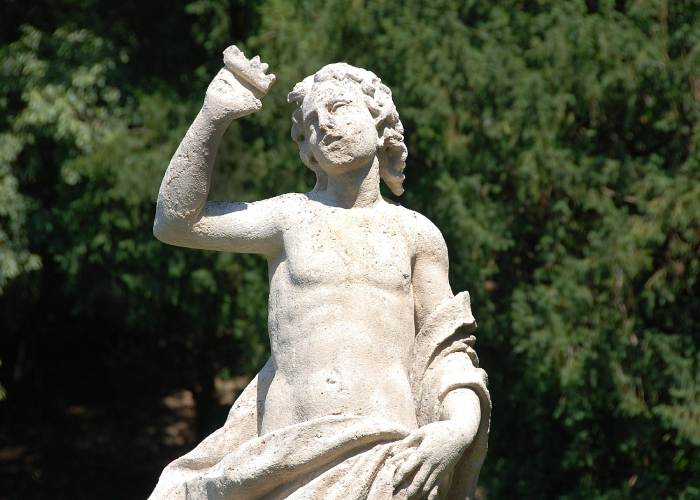
Need a moment of tranquility? Cross the river and enter the gates of Giardino Giusti. This is one of the finest examples of an Italian Renaissance garden in the country. Wander through geometric box hedges, past mythological statues, and fragrant lemon trees. Don’t miss the climb up the grotto-lined hill to the viewing terrace. The view back over the garden towards the city is one of Verona’s most photographed and for good reason.
The flavor of Verona: A culinary journey
Verona’s cuisine is hearty, rich, and deeply satisfying, a reflection of its inland location.
What to eat:
- Pastissada de Caval: A slow cooked horse meat stew, it’s the city’s most traditional dish. Don’t be put off by the main ingredient; it’s tender, flavorful, and a true taste of history.
- Risotto all’Amarone: Creamy risotto cooked with the powerful, full bodied Amarone della Valpolicella wine. This is a decadent, must-try dish for any food lover.
- Pandoro: The iconic golden, star shaped Christmas cake was born in Verona. You can find it in pastry shops year-round.
What to drink:
You are in the heart of the Valpolicella wine region. Your trip is not complete without a wine tasting.
- Amarone della Valpolicella: A rich, intense, dry red made from partially
dried grapes.
- Valpolicella ripasso: Often called “the baby Amarone,” it’s a more accessible but still complex wine.
- Soave: A crisp, elegant white wine from vineyards
just east of the city.
Consider a half day trip into the Valpolicella hills. The rolling vineyards and historic wine estates, or cantinas, offer breathtaking tastings and a glimpse into the rustic beauty of the Veneto countryside.
A practical guide for your Verona tour
Getting there & around:
Verona is easily reachable via the Verona Villafranca Airport (VRN), which connects to the rest of Europe. It is also a major hub for the Milan-Venice railway. Walking isn’t just a way to explore Verona it’s the best way to experience its charm.
The Verona card:
If your trip includes visiting numerous museums and sites, the Verona Card is a time-saving investment. It grants free or discounted entry to most major attractions, such as the Arena, Lamberti Tower, Castelvecchio, and includes public mobility via city buses.
Day trips:
Verona is centrally located for discovering Northern Italy, making it an ideal base for exploring the romantic canals of Venice, the beautiful Lake Garda, or even the fashionable city of Milan.
When to go:
The best time to visit is during spring (April to June) and autumn (September to October), offering comfortable weather and fewer crowds.
Summer is both hot and busy, especially during the opera season, but the buzz is electrifying.
The real magic of Verona
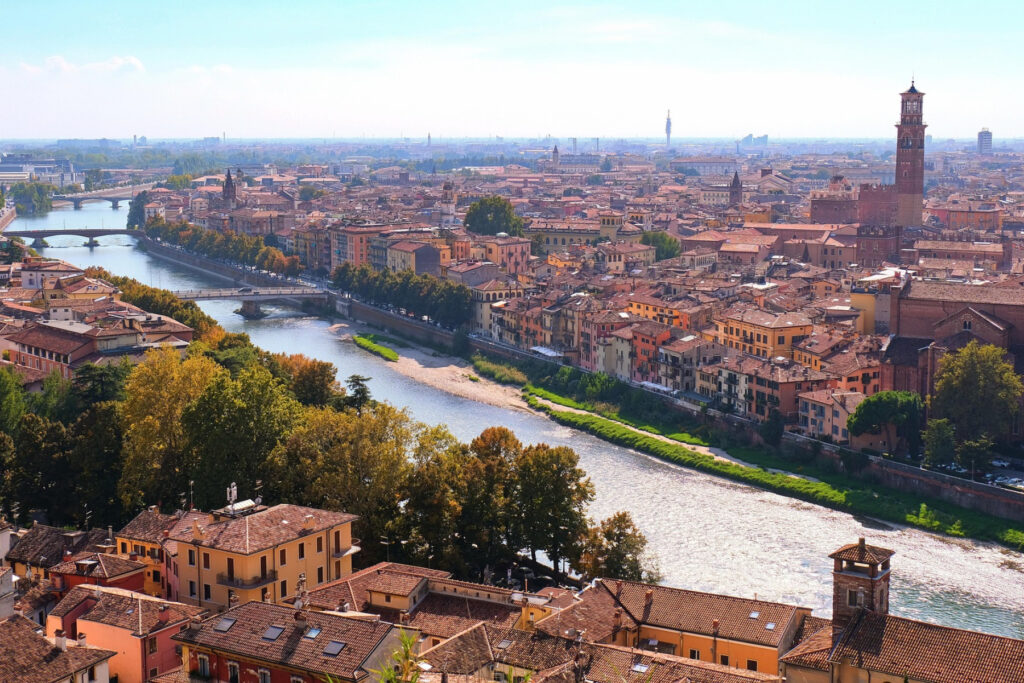
In the end, the true essence of Verona is not found on any standard checklist. It’s in the quiet moments. It’s in the way the golden light casts upon the marble of the Arena as the sun sets. It’s in the taste of an Amarone, sipped in a small, hidden osteria away from main thoroughfares. It’s in the ambiance of Italian chatter that echoes down cobbled lanes after dusk. Therefore, come for the romance of Romeo and Juliet, but stay for the living and breathing charm that has captured hearts from two millennia. Verona isn’t simply a destination; it’s an emotion. And it’s waiting for you to discover it.
One Response