
Let’s be honest. When you think of Pisa, the first thing that comes to mind is the leaning tower. It’s such a strong image that it has overshadowed the city itself. Millions of people travel to the Campo dei Miracoli just to take that one famous photo, pretending to hold up the tower. But what if I told you that doing only that means you’re missing the real heart of Pisa entirely? This city, located along the banks of the Arno River, is a mix of rich medieval history, a lively university scene, and quiet areas that feel like a completely different world from the tourist spots. As someone who has traveled a lot and loves Italy, I’ve learned that Pisa’s biggest treasure is the surprises it has for those who take the time to stay a little longer. This guide is meant to take you beyond the typical postcard views. We’ll cover the main highlights, of course, but we’ll also explore the parts of Pisa that locals truly appreciate.
The iconic heart:
Piazza dei Miracoli
No visit is complete without seeing the square that lives up to its name: the Field of Miracles. It’s a big green space with four beautiful white marble buildings. The view, especially at sunrise or sunset, is really special and almost magical.

The leaning tower (Torre Pendente)
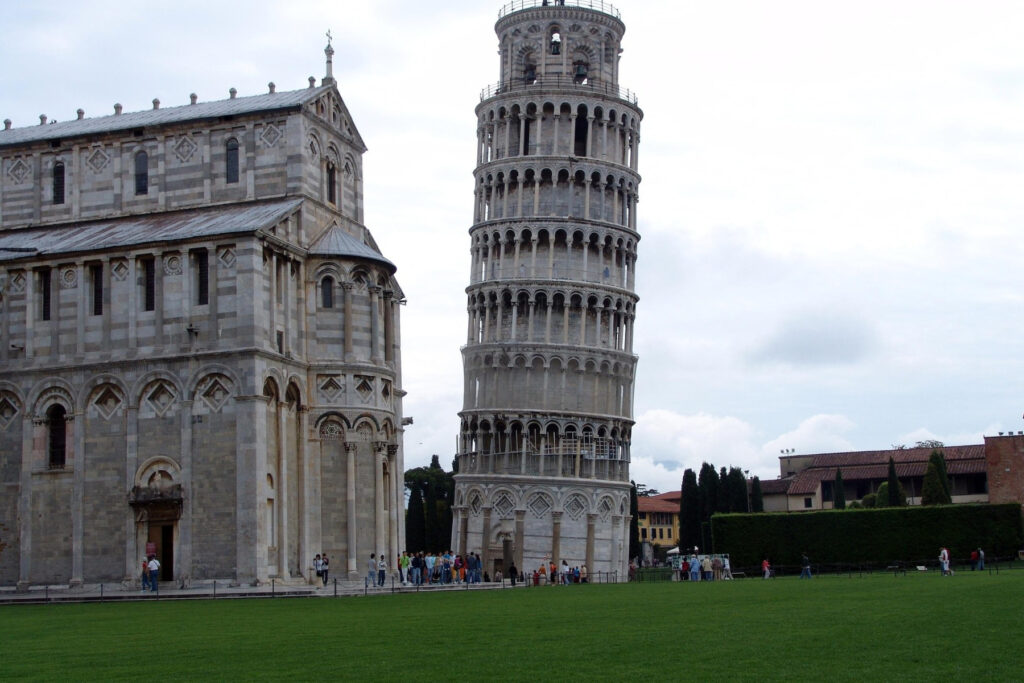
Let’s talk about the big elephant in the square. The Leaning Tower is a tall bell tower that started to tilt during construction in the 12th century because of a weak base. Its 5.5 degree lean is what makes it famous, but its beauty comes from the detailed arcades and columns.
- The climb:
Yes, you should climb it. It’s important to book tickets online well in advance. As you go up the 294 steps, you’ll feel the lean and the view from the top is amazing and unforgettable.
- The photo op:
Embrace the cliché! Taking that classic “push the tower” photo is a must. The best time for good photos is in the morning.
Pisa cathedral (Duomo di Pisa)
Often overlooked because of the tower, the Cathedral is a great example of Pisan Romanesque style. The front has columns and bronze doors, and the inside is large and serious with a great pulpit by Giovanni Pisano. Your ticket for the Leaning Tower usually gives you access to the Cathedral too don’t miss it.
The baptistery (Battistero)
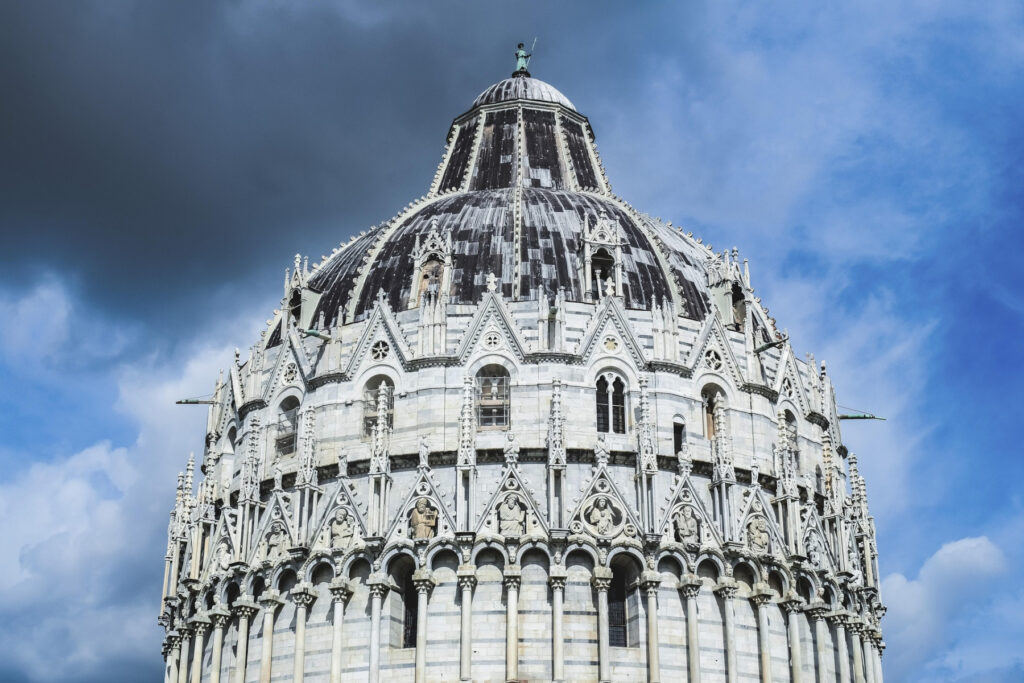
This is the biggest baptistery in Italy. It’s a circular building that makes amazing echoes.
Stand in the middle and hum a note, and you’ll hear it clearly. Climb to the upper gallery for a great view of the inside and the tower beyond.
The monumental cemetery (Camposanto monumentale)
This cloistered cemetery is said to have been built on holy ground brought back from Golgotha during the Crusades. Its peaceful cloisters surround a central courtyard with beautiful frescoes and ancient sarcophagi. It’s a place of deep calm.

Crossing the river: The charm of Pisa beyond the tower
Once you’ve had enough of the miracles, walk south, cross the Ponte di Mezzo, and enter the real heart of the city.
Piazza dei Cavalieri (Knights’ Square):
This square used to be the political center of medieval Pisa. It was redesigned by the Medici. The main building is the Palazzo della Carovana, with its decorated facade, which now houses the prestigious Scuola Normale Superiore university. The atmosphere here is both academic and historic.

Borgo stretto:
This is Pisa’s stylish shopping street. It’s a covered medieval road with cafes, shops, and old pharmacies. It’s the perfect spot for a slow walk and a coffee in the afternoon.
The arno riverbanks (Lungarni):
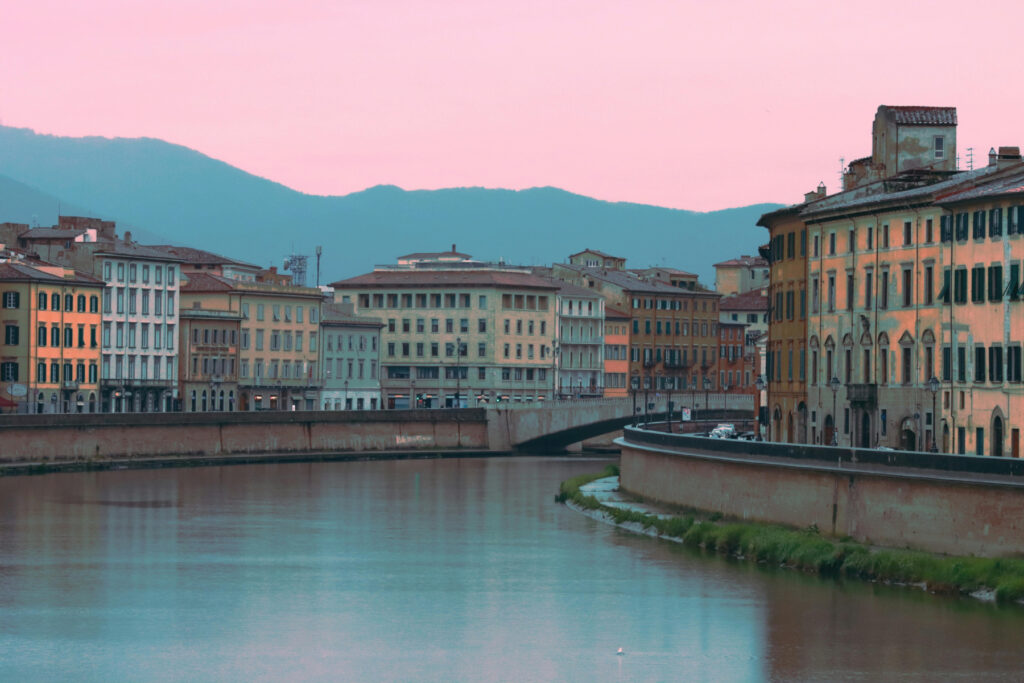
Pisa’s connection to the Arno River is as strong as Florence’s. The palaces along the river are beautifully lit at night. For a great view, visit the small church of Santa Maria della Spina, a Gothic treasure on the water’s edge.
A taste of Pisa: The flavors of tuscany
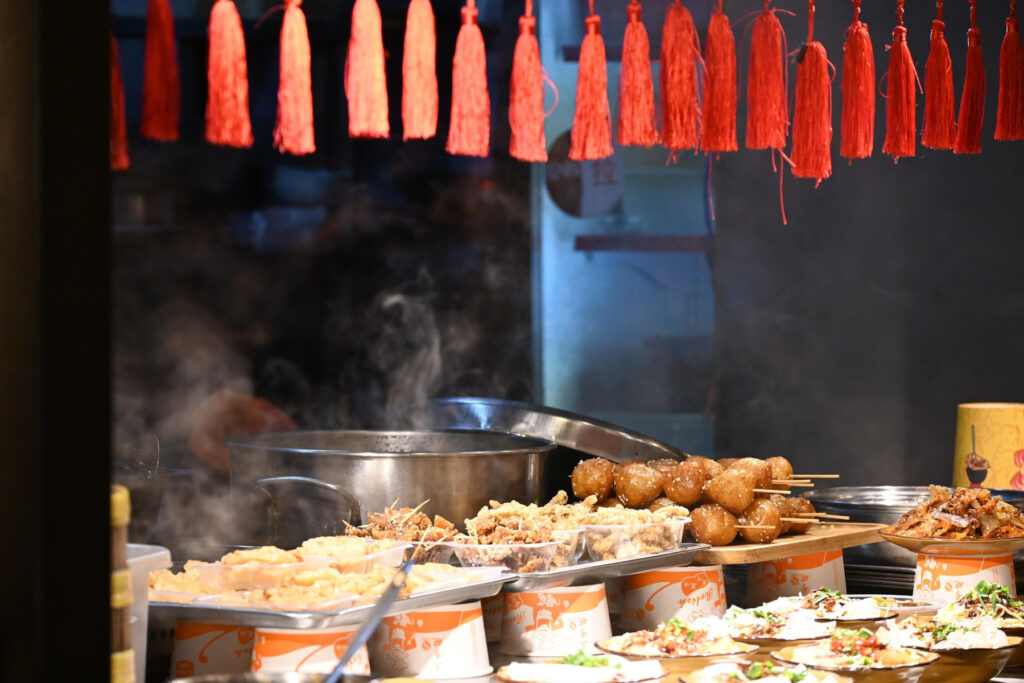
Pisan food is rich, influenced by both rivers and the sea, and really satisfying.
Start with soup:
Try Pappa al Pomodoro, which is a thick tomato and bread soup, or Ribollita, a hearty dish made from vegetables and bread. These are common dishes you’ll find all over the area.
Pasta is paramount:
Look for Pasta con le Baccelli, a local specialty made with fresh pasta and a sauce of peas and pancetta.
From the river:
Since Pisa is near the coast, you shouldn’t miss out on Cèe alla Pisana, which is baby eels, or other fresh seafood dishes.
Street food snack:
Grab a Torta co’ Bischeri, a sweet tart made with rice and chocolate, from a local bakery.
Wash it down:
You’re in Chianti country, so a glass of strong red wine pairs perfectly with any meal.
Practical magic: Your Pisa travel tips
How long to stay?
Pisa is great for a one or two day visit. Many people come from Florence as a day trip, but staying overnight lets you enjoy the city without the crowds of tourists.
Getting there & around:
Pisa International Airport (PSA) is one of the main airports in Tuscany. The city is very walkable, and the train station is just a 20 minute walk from the Tower.
Day trips from Pisa:
Pisa is a great base for exploring nearby places. The Cinque Terre, the medieval town of Lucca, and the wine region of San Gimignano are all easy to reach by train or car.
When to go:
The best times to visit are during the shoulder seasonsnApril to June and September to October. The weather is nice, and there are fewer people. July and August can be very hot and crowded.
The final verdict: Is Pisa worth visiting?
Yes, definitely. The Leaning Tower is a world wonder for a reason, and seeing it is a must-do experience. But the real charm of Pisa comes when you put away your camera and map, and just start walking. It’s in the lively atmosphere of students in a piazza, the warm light on the Arno at sunset, and the simple joy of a perfectly made plate of pasta. So, come for the tower, but stay for the city. Let Pisa surprise you. You’ll find it’s so much more than just its famous lean.
2 Responses