
There are places in the world where history seems far away, like a story in a book. But then there are places like Pompeii and Herculaneum. Here, history is right under your feet. You can feel it in the quiet streets and in the empty spaces left behind by volcanic rock. Visiting these two cities is more than just a tour it’s an emotional journey into the everyday life of the ancient Roman world, frozen in time by a sudden, terrible event. For any traveler to Italy, going beyond the famous cities of Rome, Florence , and Venice to explore these archaeological sites is a powerful and moving experience. But which one should you choose? What makes them different? This guide will help you understand the past through their stories.
The day the world stopped: The Vesuvius Eruption of 79 AD
For centuries, Mount Vesuvius was just a quiet, fertile mountain nearby. But on October 24th, 79 AD, it erupted with huge power. For Pompeii, about six miles away, it meant a storm of pumice and hot ash falling for hours. Roofs collapsed, and the city was buried under thick layers of ash. Herculaneum, which was closer to the mountain, had a different and even more terrifying fate. It first got covered in ash, but then it was hit by fast-moving, superheated clouds of gas, ash, and rock. These clouds turned everything into carbon instantly, sealing the town in a solid, airtight tomb. This key difference explains what you see today.
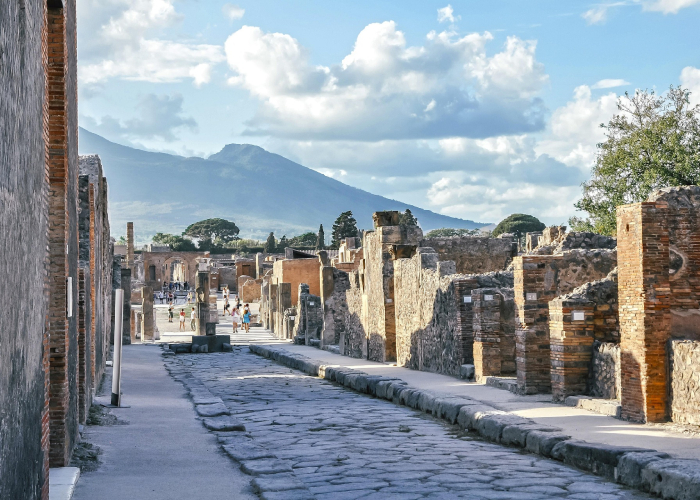
Pompeii: The big, busy city
Walking into Pompeii is a huge experience. It was a busy city with about 20,000 people. It’s so big that you’ll need hours, maybe even a whole day, to explore just a little of it.
What makes Pompeii special:
- The grandeur of public life:
You can see the huge Forum, the main place for politics and religion, with Mount Vesuvius in the background. Imagine the cheers at the Amphitheatre, one of the oldest surviving Roman amphitheaters. Explore the Stabian Baths, with their clever heating systems and beautifully preserved stucco ceilings.
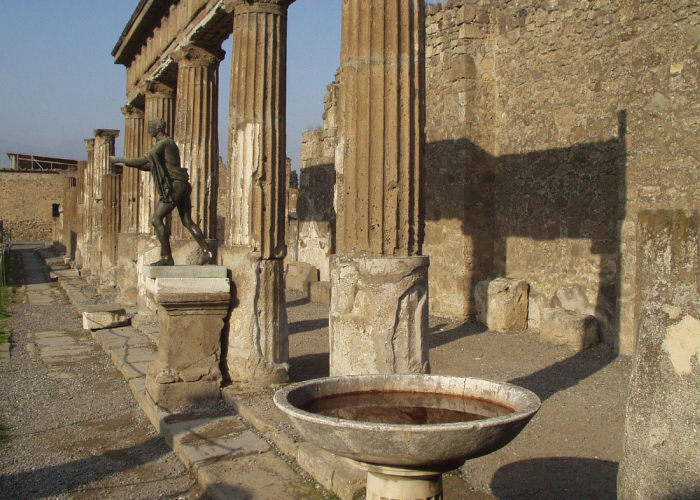
- The art of daily living:
Pompeii gives a clear picture of life in ancient Rome. You can walk into bakeries with old millstones, step into rich homes with fresh frescoes showing myths and daily life, and see the marks left on the streets by chariot wheels.
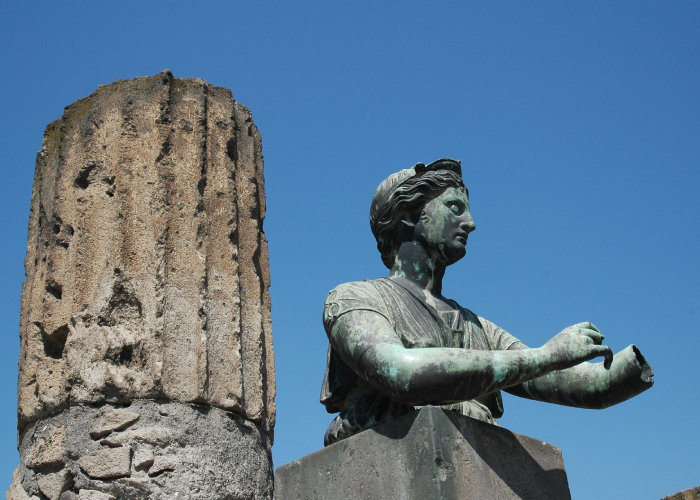
- The casts:
Pompeii’s strongest legacy is the plaster casts. As the bodies of people decomposed in the ash, they left empty spaces. Archaeologists filled these with plaster, making heartbreaking images of people in their final moments like a family together or a man covering his face.
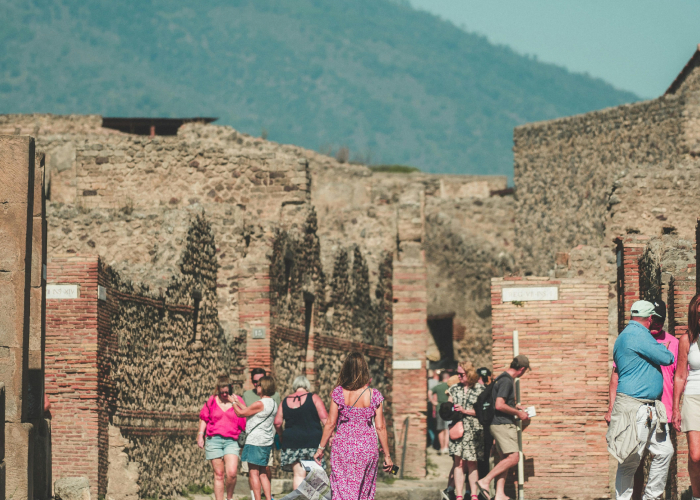
- Pompeii feels like a full city, but one without its people. It’s amazing in size and deeply touching in its human stories.
Herculaneum: The smaller, wealthier town
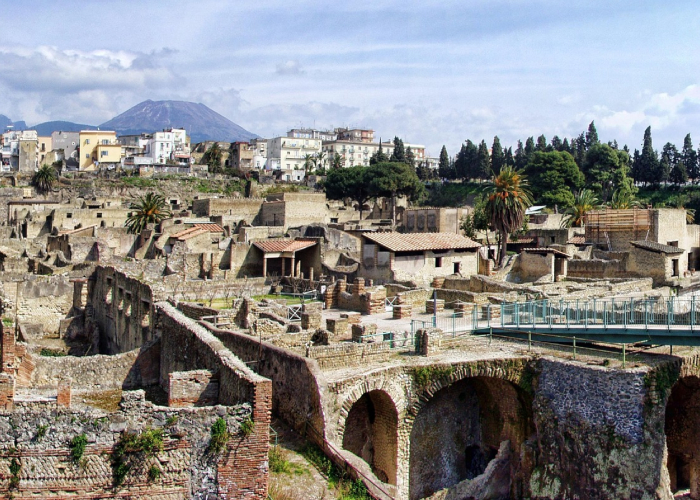
If Pompeii is a big, dramatic story, Herculaneum is a detailed, emotional tale. Smaller and more wealthy, it was a seaside resort for the rich. The way it was destroyed by pyroclastic flows helped preserve it in a way Pompeii wasn’t.
What makes Herculaneum special:
- Incredible organic preservation:
The heat turned wood into carbon, so you can see two story houses with intact stairs, beds, doors, and even wooden lofts. This kind of preservation is rare in ancient ruins. You don’t just see the stone structure; you see the ghost of a living house.
- A richer palette:
Herculaneum is full of beautiful mosaics and frescoes that are still colorful. The House of the Neptune Mosaic and the House of the Deer are amazing examples, like walking into an art gallery.
- The boathouses:
In the 1980s, ancient boathouses along Herculaneum’s shore were found with the skeletons of over 300 people who tried to escape by boat. It’s a heart-wrenching site that brings the tragedy of the event into sharp focus.
- Herculaneum offers a closer, more personal
view of an ancient Roman town. You can stand in a kitchen and almost feel the presence of the people who lived there.
Pompeii vs. Herculaneum: Which one should you visit?
This is a common question, and the honest answer is: if you have time, you should visit both. They work together perfectly. But if you’re short on time, here’s a simple choice:
Choose Pompeii if:
You want to see the big picture of a Roman city, visit famous places like the Forum and Amphitheatre, and don’t mind walking a lot and dealing with crowds. It’s the classic, grand experience.
Choose Herculaneum if:
You’re short on time or mobility, interested in seeing everyday objects like wood and food preserved, and prefer a more focused, personal, and less crowded visit.
- Many visitors find that starting with Herculaneum gives a manageable and
deeply impressive introduction before
exploring the vastness of Pompeii.
Essential travel tips for your visit
Tickets and Tours:
It’s best to book your tickets online ahead of time,
especially for Pompeii. This helps you skip the long lines. You might want to join a guided tour for at least one of the sites. A good guide can make the ruins feel alive in a way a map never can.
Getting there:
Both sites are easy to reach from Naples using the Circumvesuviana train line, which runs toward Sorrento. To get to Pompeii, you’ll get off at “Pompei Scavi-Villa dei Misteri.” For Herculaneum, the stop is “Ercolano Scavi.”
What to bring:
You’ll be walking on old stone streets, so wear
comfortable, sturdy shoes. Bring a hat, sunscreen, and a water bottle there’s very little shade in Pompeii. Herculaneum has more shade, so you might not need as much.
Don’t rush:
These are not places to quickly check off a list. Give yourself at least 4 to 5 hours for Pompeii and 2 to 3 hours for Herculaneum. Take time to sit and really enjoy the feeling of the place.
Look Up and Down:
Notice the “stepping stones” on Pompeii’s streets. These helped people walk without stepping in waste. Also, look up at the beautiful frescoes on the walls. The smallest details can tell us a lot about the past.
A final reflection
Visiting Pompeii and Herculaneum is more than just learning history. It’s a powerful reminder of how fragile life is. It shows both the strength of humans to remember and the force of nature that buried these places. Walking these quiet streets, you’re standing where Romans once lived, loved, worked, and dreamed, all under the shadow of a mountain they didn’t realize was dangerous. It’s an experience that changes you, leaving a deep connection to the past and a story you’ll never forget.
2 Responses