
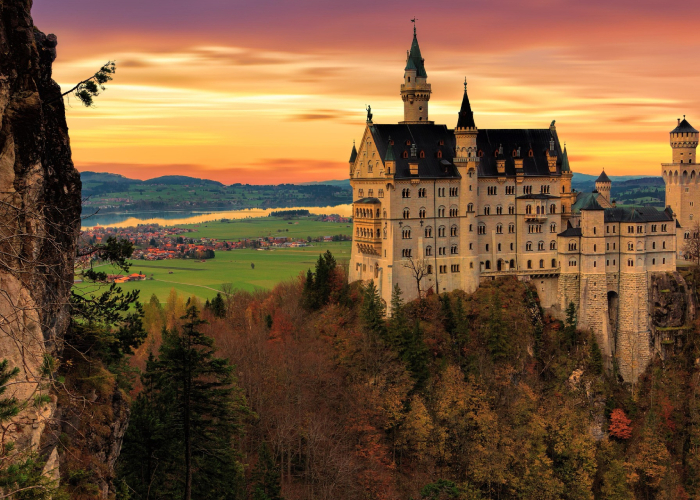
Perched high in the Bavarian Alps, with towers reaching up to the sky and a background of tough mountain peaks, Neuschwanstein Castle doesn’t just look like something from a storybook it really inspired those stories. This is the castle that started the modern fairytale idea, the model for Disney’s Sleeping Beauty Castle, and a symbol of a king’s big, sad dream. But there’s a lot more to Neuschwanstein than just the pretty pictures you see in postcards.
This is your full guide to the castle, where we’ll go beyond what you read in brochures to explore its history, give you the steps you need to visit, and show you the real spirit of this amazing place.
To understand Neuschwanstein, you have to understand the man who built it: King Ludwig II of Bavaria. He was often called the “Fairytale King” or “Mad King Ludwig,” and he was a lonely, dreamy person who became king at just 18. He loved Richard Wagner’s operas and was really into the old German stories about knights, heroes, and legends.He wasn’t happy with the real life of being a king and the politics that went with it.So Ludwig built fancy palaces that were like his own stories. Neuschwanstein was his most personal project, a place to escape from the real world and a way to honor the imaginative worlds in Wagner’s operas.The name “Neuschwanstein” means “New Swan Stone,” and it comes from the “Swan Knight” Lohengrin, a hero in one of Wagner’s operas.The swan, which was also King Ludwig’s personal symbol, is a design you’ll see all over the castle.
1.Getting your Neuschwanstein Castle tickets: The golden rule
This is the most important tip: You can’t buy tickets at the castle itself. All tickets must be bought in advance from the official ticket center in the nearby village of Hohenschwangau, at the bottom of the hill. During the busy season (June to August), tickets can sell out days or even weeks in advance. The safest bet is to book online as soon as you know your travel dates.
2.How to get there
The most common way is from Munich.
By train and bus: Take a train from Munich Hauptbahnhof to Füssen (about 2 hours).The journey has beautiful scenery. FromFüsse station, a short bus ride (line 73 or 78) takes you to the Hohenschwangau ticket center.
By car: Driving takes about 1.5 to 2 hours.Parking is available in Hohenschwangau for a fee.
3.Reaching the castle
From the ticket center, you have three options:
Shuttle bus: This is the fastest and most popular choice.It takes you most of the way up, leaving a 5- to10-minute walk down to the entrance. Note: It doesn’t run when there’s ice.
Horse Drawn carriage: A romantic and traditional way to get closer to the castle, but there may be lines.
On foot: A steep, 30- to 40-minute walk up a paved path.
It’s a bit hard, but the views are beautiful.
4.The view you can’t miss: Marienbrücke (Mary’s Bridge)
Your ticket gets you inside, but the famous photo of Neuschwanstein is from the outside. After your tour, take a short walk to Marienbrücke. This bridge hangs over the Pöllat Gorge and gives you the perfect view of the castle against the Alpine landscape. It’s the photo you’ve seen a thousand times, and it looks even more amazing in person.
Though the outside of Neuschwanstein is a great example of Romanesque revival architecture, the inside is where Ludwig’s dream really comes alive. It feels more like a stage set than a real castle. Work on the castle started in 1869, but it wasn’t finished when Ludwig died in 1886. Of the over 200 rooms that were planned, only around 15 were completed. Still, these rooms are full of amazing details
The Throne Hall
Don’t be fooled by the name.This grand two story space isn’t meant for royal events but is meant to show that the king was chosen by God. It’s modeled after a Byzantine church, with a big chandelier and fancy mosaics that show Christ and kings. But there’s no throne here Ludwig didn’t get to sit on it before he died.
The Singer’s Hall
This is the biggest room in the castle, and it was meant to honor Wagner’s operas. It has murals that tell the story of Parsifal, and Ludwig wanted to use this room for private musical events. However, no performances actually happened here during his lifetime.
The Grotto
One of the strangest rooms is an artificial cave built right into the castle. It has a waterfall and special lighting, and it connects Ludwig’s living area to his study. It shows how he wanted to blend his home with the magical, natural, and mythical world he loved.
While you’re in Hohenschwangau, there are other interesting places to visit:
Ludwig’s luxury projects left him in a lot of debt. His disconnection from the government worried his advisors. In 1886, just weeks after he first moved into the unfinished Neuschwanstein, he was declared insane by a secret group and removed from his throne. A few days later, he and his psychiatrist were found dead in a shallow lake under mysterious circumstances that are still a mystery today.
He never saw his dream castle completed. Neuschwanstein was opened to the public just seven weeks after his death. The private sanctuary he built for himself became one ofthe most famous tourist attractions in the world
Many travelers go on to explore the amazing scenery of northern Italy. The drive from southern Germany to Italy is one of Europe’s most beautiful routes, passing through the amazing Alps, cozy villages, and clear, sparkling lakes. From the castle’s towers to the shores of Lake Como, the journey feels like stepping into a storybook. Travelers often enjoy German culture, architecture, and mountain views before entering Italy’s charming, romantic atmosphere. Whether heading to Venice for its famous canals or Lake Como for its calm, elegant beauty, this trip across borders connects two of Europe’s most famous places. It’s where history, culture, and nature come together. For those planning a European trip, combining Germany’s castles with Italy’s top tourist spots offers the best of both adventure and relaxation.
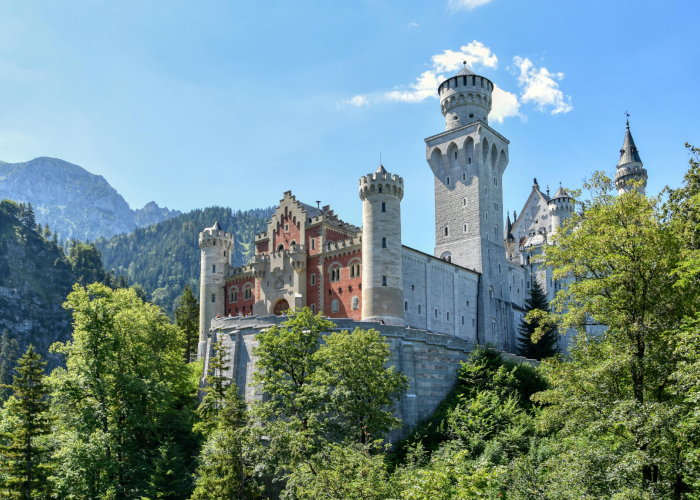
Neuschwanstein Castle is more than just a stunning structure; it is a tribute to a dream. It’s a place where architecture, art, nature, and deep human feelings come together. It stands as a testament to the strength of imagination and the sad reality of a king who lived too much in his dreams. As you walk through its halls, you’re not just visiting a historical site. You’re stepping into the mind of Ludwig II a space filled with breathtaking beauty, deep loneliness, and a lasting, magical legacy that still draws people from around the world. In every way, it is a real-life fairytale, waiting for you to uncover its story.