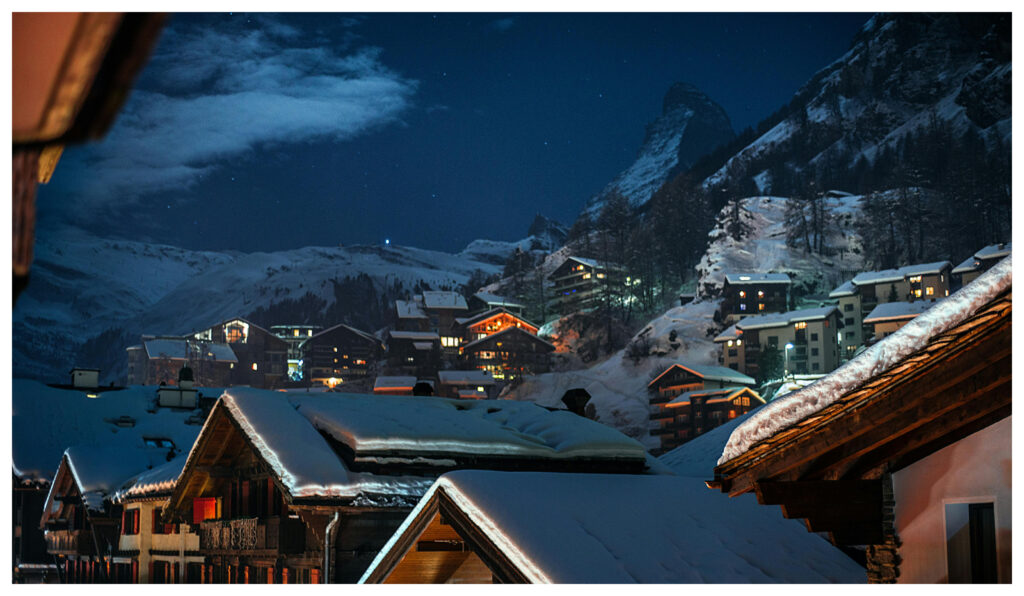
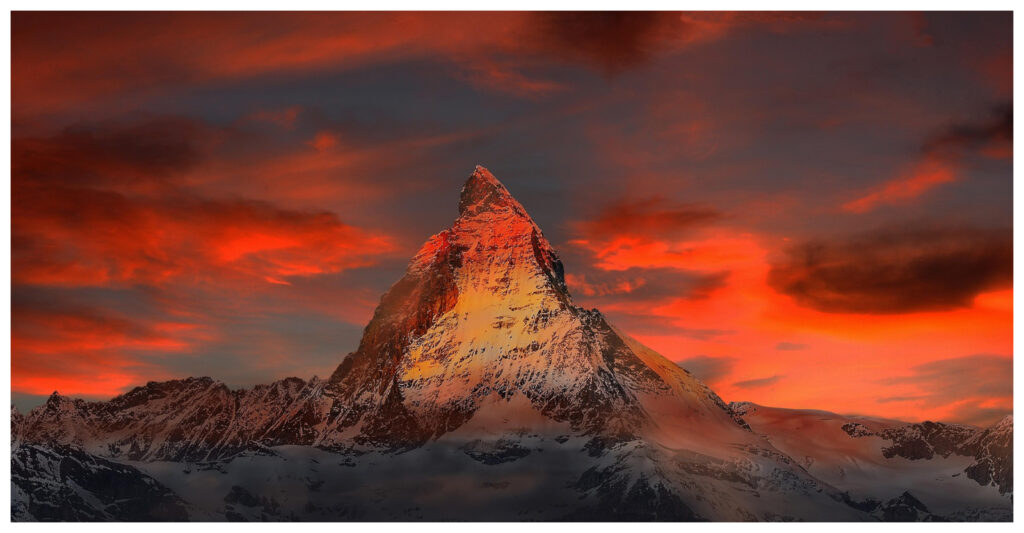
There’s a special kind of magic that happens in Zermatt as the evening sun sets behind the mountain peaks, turning the famous Matterhorn’s peak into a fiery red. The air feels fresh, the sound of horse drawn carriages mixes with friendly talk from nearby restaurants, and the big, famous mountain’s shadow stands out against the sky. Zermatt isn’t just a place to stay it’s an experience you won’t forget. Zermatt is car free, surrounded by 38 mountains that are more than 4,000 meters tall, and filled with real Swiss charm. It should be on every traveler’s list of places to visit. Whether you love skiing, hiking, or just want to see amazing views, Zermatt has something for you.
First, what makes Zermatt special?
The village keeps traditions alive and protects the environment. There are no cars in the village, and you get there by train, then walk, use electric taxis, or ride in horse drawn carriages. This helps keep the air clean and makes every walk feel special. The Matterhorn is a big part of what makes Zermatt unique. Seeing it in person is an unforgettable experience. It looks even more dramatic, tall, and beautiful than any photo. The Matterhorn is like the heart of Zermatt and you can feel it everywhere you go.
Getting to Zermatt isn’t straightforward.
You can’t drive directly into the village. The journey starts in the nearby town of Täsch.
- By train:
This is the most scenic and recommended way to go. The Swiss trains are very good. You take a train to Visp or Brig, then switch to the Matterhorn Gotthard Bahn, and enjoy a great view as you go up the valley to Zermatt. The last part of the trip is especially beautiful.
- By car:
If you drive, you have to park your car at the large multi level car park in Täsch. From there, it’s a quick 12 minute train ride into Zermatt. It’s a good idea to book your parking spot online before the busy season.
- By air:
The nearest international airports are Geneva (GVA) and Zurich (ZRH). Both have train stations inside the airport, so getting to Zermatt is easy and smooth.
Where to stay:
Zermatt has a variety of places to stay, but it’s best to book early, especially during busy times like Christmas, February, and July or August.
Luxury:
For a top-tier experience, The Omnia is a modern building built into the rock with a beautiful infinity pool and excellent service. The Grand Hotel Zermatterhof is a classic place with old world elegance and friendly hospitality right in the village.
Mid-Range:
Hotels like Hotel Alpenhof or Hotel Christiania offer great locations, Swiss style hospitality, nice spa areas, and the classic mountain feel without the higher prices.
Budget-Friendly:
Look for well reviewed guesthouses and B&Bs such as Jugendherberge Zermatt (a modern hostel) or smaller family run hotels on the edge of the village. Even these places give you access to all the magic of Zermatt.
Things to do in Zermatt:
Zermatt is a great place to visit all year round.
Winter adventures:
Skiing and Snowboarding:
Zermatt’s ski area, connected with Cervinia in Italy, is one of the largest in the world. There are slopes for all skill levels, from easy blue runs to exciting off piste adventures, all with the Matterhorn in the background. Spring skiing is especially long lasting.
Gornergrat Bahn:
This is a must do. Take Europe’s highest open air cogwheel railway to the Gornergrat observatory. The view of over 29 four thousand meter mountains, including the Matterhorn, is some of the best in the Alps.
Klein Matterhorn:
Ride a series of cable cars up to the “Little Matterhorn,” home to Europe’s highest cable car station. Here you can visit the Matterhorn Glacier Paradise, ski year round on the glacier, and even walk through an ice palace.
Summer adventures:
Hiking:
There are over 400km of hiking trails in the summer. The five see lake hike (5-Seenweg) is a classic, offering beautiful reflections of the Matterhorn in its alpine lakes. The hike from Schwarzsee to the Hörnli Hut is a challenging journey to the base of the Matterhorn’s climbing route.
Mountain biking:
Zermatt is a favorite spot for bikers with amazing trails for all levels through breathtaking scenery.
Scenic lifts:
Most of the popular lifts like the Gornergrat and Matterhorn Glacier Paradise continue running in the summer, allowing non hikers to enjoy the high alpine areas for picnics and photos.
Eating and after ski:
The food in Zermatt is excellent. You must try two local favorites:
Raclette:
Melting cheese scraped onto boiled potatoes, pickles, and onions. It’s a great group meal.
Fondue:
Cheese fondue is a classic, but try the alternative Fondue Chinoise (meat cooked in broth) for something different. For a unique after ski experience, visit Hennu Stall. It’s a lively, rustic barn where people dance on tables in their ski boots this is a real Zermatt memory.
Practical tips for your trip
- It’s expensive:
Switzerland isn’t a cheap place to visit. Expect higher costs for meals, rides, and hotel stays. To save money, consider staying in self catering places and buying snacks from the Coop supermarket.
- Altitude matters:
Zermatt is at 1,620m (more than 5,300 feet). The Gornergrat is over 3,000m. Stay hydrated, wear sunscreen, and take it easy on your first day to adjust to the altitude.
- Book in advance:
This is very important. For popular restaurants, key mountain railways, and guides, booking ahead is essential.
- Footwear is key:
Bring comfortable, sturdy shoes. You’ll be walking a lot on cobblestone streets and mountain paths.
Zermatt is more than just a place to check off a list. It’s a place to really feel the power of the mountains, to slow down, and to create memories that will last a lifetime. Whether you’re watching the first light of day shine on the Matterhorn from your balcony or sharing a cheese fondue after a long day on the slopes, you’ll understand why this place continues to charm people from all around the world. Start planning your 2024 trip you won’t regret it.