
There’s a reason Corfu has captured the hearts of poets, emperors, and travelers for centuries. Unlike the dry, rugged beauty of its Aegean neighbors, Corfu is a lush, green haven bordered by mesmerizing Ionian waters. It’s an island where rich history blends seamlessly with a relaxed village lifestyle, where the fragrance of olive groves mixes with the salty sea breeze, and where every cove seems to hide a pristine sandy beach. This isn’t just another Greek island; it’s a unique fusion of Greek heritage and Italian charm, sprinkled with a touch of British character. If you’re dreaming of a holiday that combines culture with coastline, let this be your guide to discovering the authentic Corfu.
Why Corfu? The Island’s unique appeal
Corfu’s identity is deeply rooted in its fascinating history. The island has been ruled by the Venetians, French, and British, each leaving a cultural imprint that’s distinct from the rest of Greece. You can see this in the Italian inspired architecture of Corfu Old Town, a UNESCO World Heritage Site. You can taste it in the local specialty, Pastitsadaa hearty meat and pasta dish with clear Venetian influences. You can even hear it in the music, with the gentle sound of the mandolin being as familiar as the bouzouki. And then there’s the natural beauty. Known as the “Emerald Isle” for its dense cypress and olive trees, the landscape offers a vibrant green palette that dramatically contrasts with the brilliant turquoise coastline, making every view feel like a postcard.

Must visit towns and villages
Corfu old town (Kerkyra):
Don’t just pass through get lost in its winding cobblestone streets, explore the ancient Old and New Fortresses, and be amazed by the Liston, an elegant promenade of cafes inspired by Paris’ Rue de Rivoli. It’s the lively, beating heart of the island.
Kassiopi:
A charming fishing village in the northeast, Kassiopi offers a more laid back alternative with a picturesque harbor, a Byzantine castle, and plenty of tavernas and bars. It’s a perfect base for exploring the northern coastline’s beaches.
Paleokastritsa:
Famous for its monastery and stunning series of bays and coves, this area is arguably Corfu’s most celebrated natural attraction. The monastery, perched on a cliff, provides panoramic views and a touch of serene history.
Benitses:
Once a quiet fishing village, Benitses has transformed into a vibrant resort town featuring a beautiful seafront promenade and excellent watersports options. It retains its charm and is close to the island’s main airport.
Corfu’s best beaches: From bustling to secluded
The coastline is incredibly varied. You can find organized beaches with sunbeds and water activities or secluded pebble coves accessible only by boat or on foot.
Glyfada:
Often ranked as the best, this is a long, wide stretch of golden sand backed by dramatic cliffs. It’s well organized with amenities but never feels overly crowded due to its size.
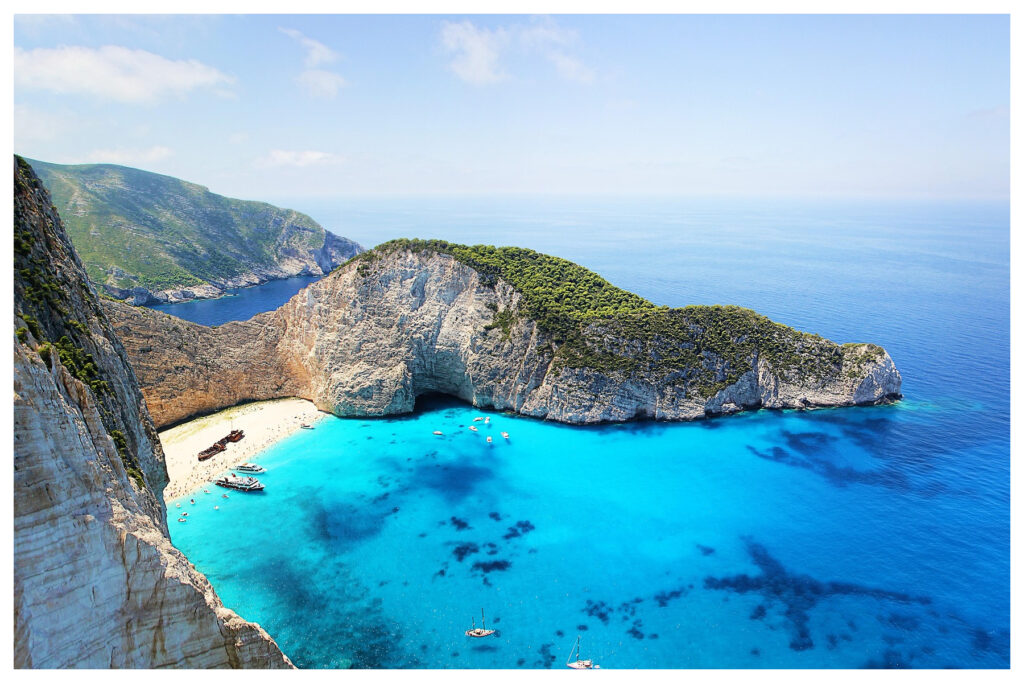
Canal d’Amour (channel of Love), Sidari:
A special geological formation where smooth sandstone cliffs have been eroded into canals. Legend says couples who swim through the channel together will get married. The surrounding area also features great sandy beaches.
Agios Gordios:
A stunning beach on the west coast with soft sand and crystal clear water, all overlooked by a giant rock rising from the sea.
The sunsets here are magical.
Ermones Beach:
A small, scenic cove surrounded by lush green hills. It’s believed to be the site of ancient Corcyra, mentioned in Homer’s Odyssey.
For the adventurous:
Discover hidden gems like Rovinia Beach, accessible only by boat or a steep path, or Porto Timoni, a double beach near Afionas where a single headland separates two enchanting coves. The 20-minute hike down to the beach is well worth the effort.
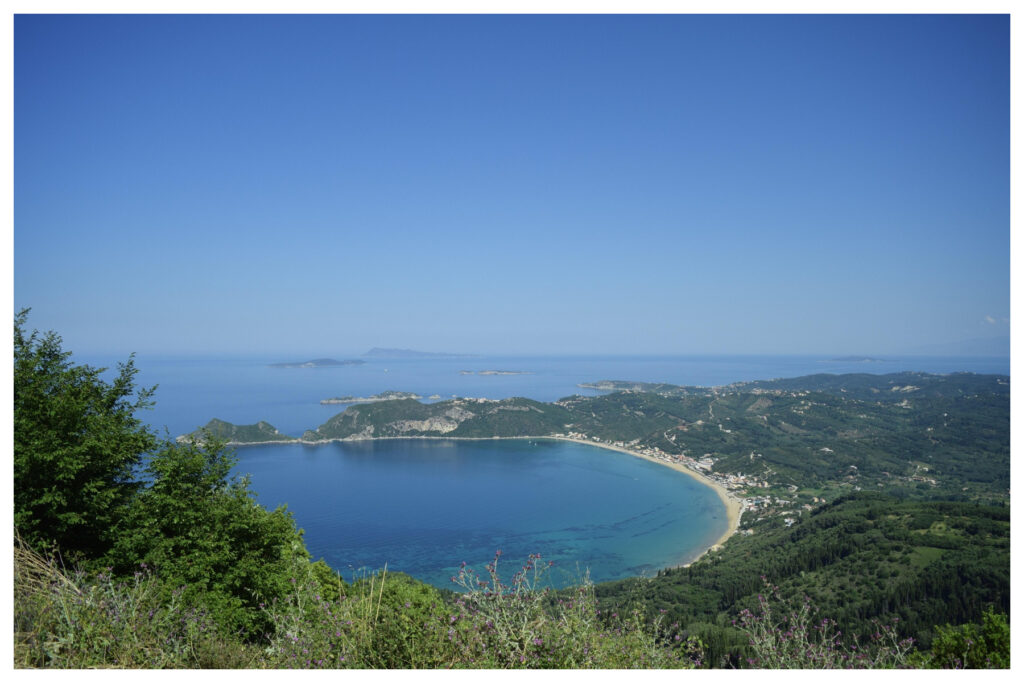
Beyond the beach: Cultural highlights & activities
There’s much more to do than just sunbathe.
Achilleion palace:
Built for Empress Elisabeth of Austria (Sisi), this palace represents her affection for Corfu and Greek mythology. The gardens, featuring statues of Achilles and breathtaking sea views, are the main attractions.
Explore mountain villages:
Head inland to places like Old Perithia, Corfu’s oldest village. Now a protected heritage site, it consists of charming stone houses and offers fantastic traditional tavernas.
Take a boat trip:
This is a must. Whether you join a group tour to nearby Paxos islands and the famous Blue Caves or rent a small private boat for the day, experiencing Corfu from the water is a completely different adventure.

Taste the local cuisine:
Go beyond gyros. Try Sofrito (veal in a white wine and garlic sauce), Bourdeto (a spicy fish stew), and of course, Pastitsada. Pair it with a local kumquat liqueur, a sweet specialty born on the island.
Practical tips for your trip
When to go:
July and August are peak season an exciting yet crowded time. For the best balance of great weather and fewer crowds, consider visiting in May, June, or September.
Getting around:
While buses serve main routes, true freedom comes from renting a car or a quad bike. The island is large, and its best secrets are hidden along winding inland roads.
Where to stay:
For first time visitors and those seeking nightlife, staying near Corfu Town is ideal. For beach lovers and family holidays, the northeast coast (Kassiopi, Nissaki) or the west coast (Paleokastritsa, Agios Gordios) are great choices. For a quieter, more authentic experience, look inland or to the south.
How long to stay:
To truly appreciate Corfu’s diversity, a week is ideal. This gives you time to explore, relax, and even take a day trip to Paxos.
- Corfu is an island that rewards curiosity. Turn off the main road, follow a path through an olive grove, and you might just find your own private slice of paradise. It’s a place of layered history, incredible natural beauty, and a warm, welcoming spirit that will stay with you long after you’ve left its shores. Start planning your escape to the Emerald Isle your perfect Greek holiday is waiting.